

Public Trust Crisis
Public trust in the KPK has declined with various polemics in the anti-corruption agency. The results of the Kompas Research and Development survey in December 2023 showed that the KPK's good image only reached 47.5 percent, the lowest of 22 surveys since January 2015. In the January 2015 survey, the KPK's good image once reached 88.5 percent.
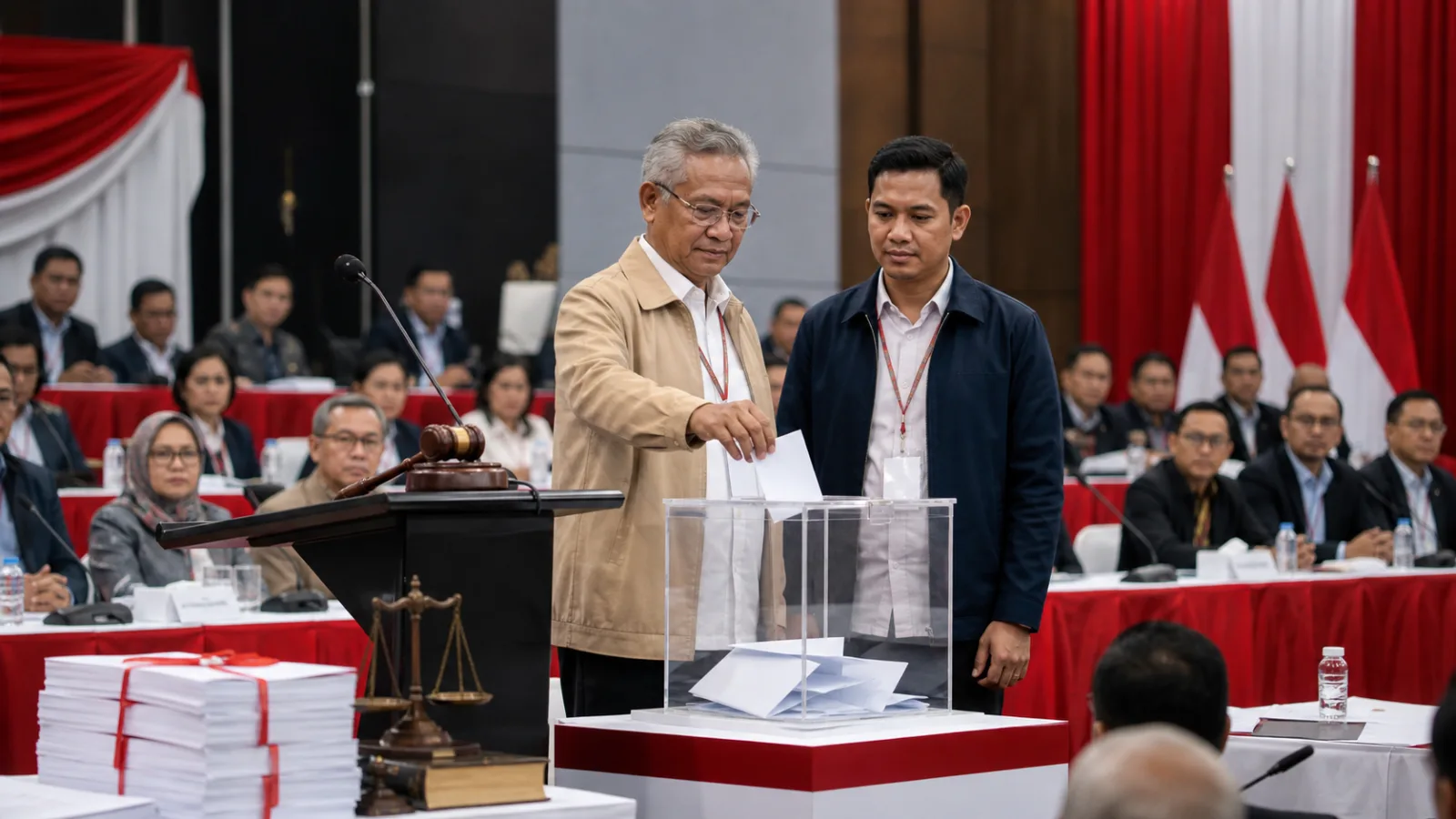
Zaenur is pessimistic that the selection committee will produce KPK leadership candidates who are independent, clean, have integrity, and are professional because the configuration of the selection committee is dominated by government elements. The government is expected to prioritize stability and security after President Jokowi steps down.


According to Zaenur, President Jokowi contributed to the decline of the KPK by revising the KPK Law. The KPK under the leadership of Firli Bahuri also removed many investigators and other KPK workers through controversial nationality insight tests.
The KPK is currently in a chaotic condition, not trusted by the public, full of internal problems, corruption cases, ethical violations, and internal drama with very poor performance.
Zaenur challenged the selection committee to prove to the public that they do not represent the interests of President Jokowi by bravely rejecting orders and pressure from the government, politicians, or other law enforcement officials who have an interest in the KPK.
In addition, the selection committee must be willing to accept input from the public who know the track record of KPK commissioner candidates. The public interacts directly with the candidates so they know the strengths and weaknesses of their track record.
"The selection committee must not pass people who are marked by the public with strong evidence, for example, have committed ethical violations or have integrity defects related to a political interest," said Zaenur.
The selection committee must also dare to remove candidates who have ethical defects or affiliations with political interests. The selection committee must discard candidates who are not of integrity before looking for qualified ones. The selection committee must look for candidates who dare to reject intervention from the government.
Furthermore, look for candidates who are professional, have integrity, have a track record in eradicating corruption or at least the ability to eradicate corruption, and have abilities in the fields of law or financial economics.
Zaenur also reminded the selection committee not to choose KPK leaders with a quota system, especially for the police and prosecutors. The selected KPK commissioners should ideally be the best figures, have no ethical defects, and be independent.
"If the selection committee does not have high courage and obeys the government, the KPK cannot be expected for the next five years," said Zaenur.
Previously, the Head of the KPK's News Section, Ali Fikri, hoped that the selection committee could work optimally and independently, prioritizing the interests of effective corruption eradication.
The KPK believes that the selection committee understands the current problems of corruption eradication and future challenges, including strengthening regulations and institutions, so that the function of corruption eradication can have a more real impact on society.
"The selection committee must also proactively absorb various suggestions, inputs, and aspirations from the public as parties who will feel the benefits of corruption eradication and victims of corrupt practices," said Ali.
Thus, it is hoped that the selection committee can produce candidates for leaders and the KPK Supervisory Board who have a track record and high commitment to corruption eradication, are of integrity, free from conflicts of interest, and are professional.














Comments
0Share your perspective politely, stay relevant, and focus on the article. Comments appear after moderation.
Join the discussion
Write a clear, polite response that stays on topic.
No comments yet. Be the first to discuss.
Comments will appear after moderation.