
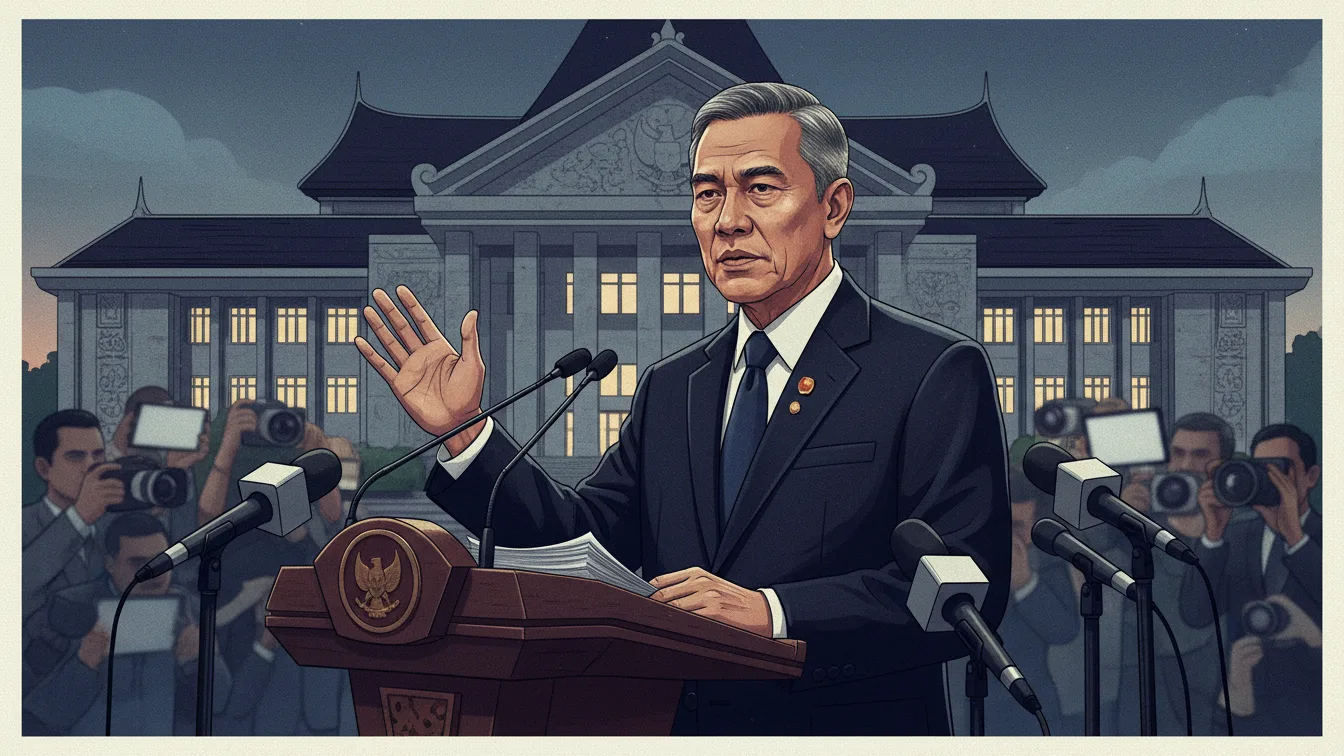
JAKARTA, LITERASIHUKUM.COM — Israeli Prime Minister Benjamin Netanyahu acknowledged the attack on the gas complex Asaluyeh and the gas field South Pars belonging to Iran was carried out by Israel without direct involvement from the United States. In his latest statement, Netanyahu said Israel “acted alone” in the operation, while asserting that US President Donald Trump had asked Israel to refrain from carrying out similar attacks on Iranian energy facilities.
The statement is important because there had previously been various speculations that the attack on one of Iran's most vital energy assets was carried out as part of a joint operation with Washington. However, both Netanyahu and Trump have now signaled that the attack was not a joint operation. Trump even stated that the United States and Qatar were not involved and had no role in the attack on South Pars, while warning Iran not to attack Qatar, a key US ally in the Gulf that also shares the gas field with Iran.


Trump Asks Israel to Hold Further Attacks on Energy Infrastructure
Netanyahu also revealed that after the attack, Trump asked Israel not to repeat the attack on Iranian energy targets. The request is considered to be related to Washington's concerns about the global economic impact, especially the surge in energy prices and the risk of disruption to oil and gas supplies from the Gulf region. In this context, Netanyahu's admission shows that even though Israel acted unilaterally, its military steps remain in the shadow of the United States' strategic calculations.
Netanyahu also asserted that the accusation that Israel is “dragging” the United States into war is untrue. He sought to demonstrate that the decision to attack South Pars was Israel's own decision, although there was still intensive communication with the White House. At the same time, he praised Trump for being seen as leading efforts to prevent Iran from having a stronger nuclear capacity.
Attack on South Pars Raises War Escalation and Shakes Energy Market
Attack on South Pars is seen as a major escalation in the ongoing conflict because the facility is one of Iran's energy arteries. Reuters reported that South Pars is the largest gas field in the world, sharing territory with Qatar, and contributing approximately 70–75 percent of Iran's gas supply. Damage or disruption in this region not only impacts Iran's domestic needs, but also has the potential to disrupt regional and global energy supply chains.
Shortly after the attack, Iran launched a retaliatory attack on energy infrastructure in the Gulf region, including Ras Laffan Industrial City in Qatar, which is one of the world's most important LNG centers. The escalation caused energy prices to soar and heightened concerns that the war was no longer limited to military targets, but had entered the heart of the region's economic infrastructure. In the latest development, the US government has also asserted that there should be no further attacks on energy facilities that could exacerbate the global crisis.
Thus, Netanyahu's admission that Israel acted alone in South Pars is not merely a technical clarification. The statement also reveals three important things: first, Israel wants to assert its military autonomy; second, the United States is trying to distance itself from attacks on Iranian energy assets; and third, this conflict has now entered a much more dangerous phase because it touches vital infrastructure that directly affects the world economy.




















Comments
0Share your perspective politely, stay relevant, and focus on the article. Comments appear after moderation.
Join the discussion
Write a clear, polite response that stays on topic.
No comments yet. Be the first to discuss.
Comments will appear after moderation.