

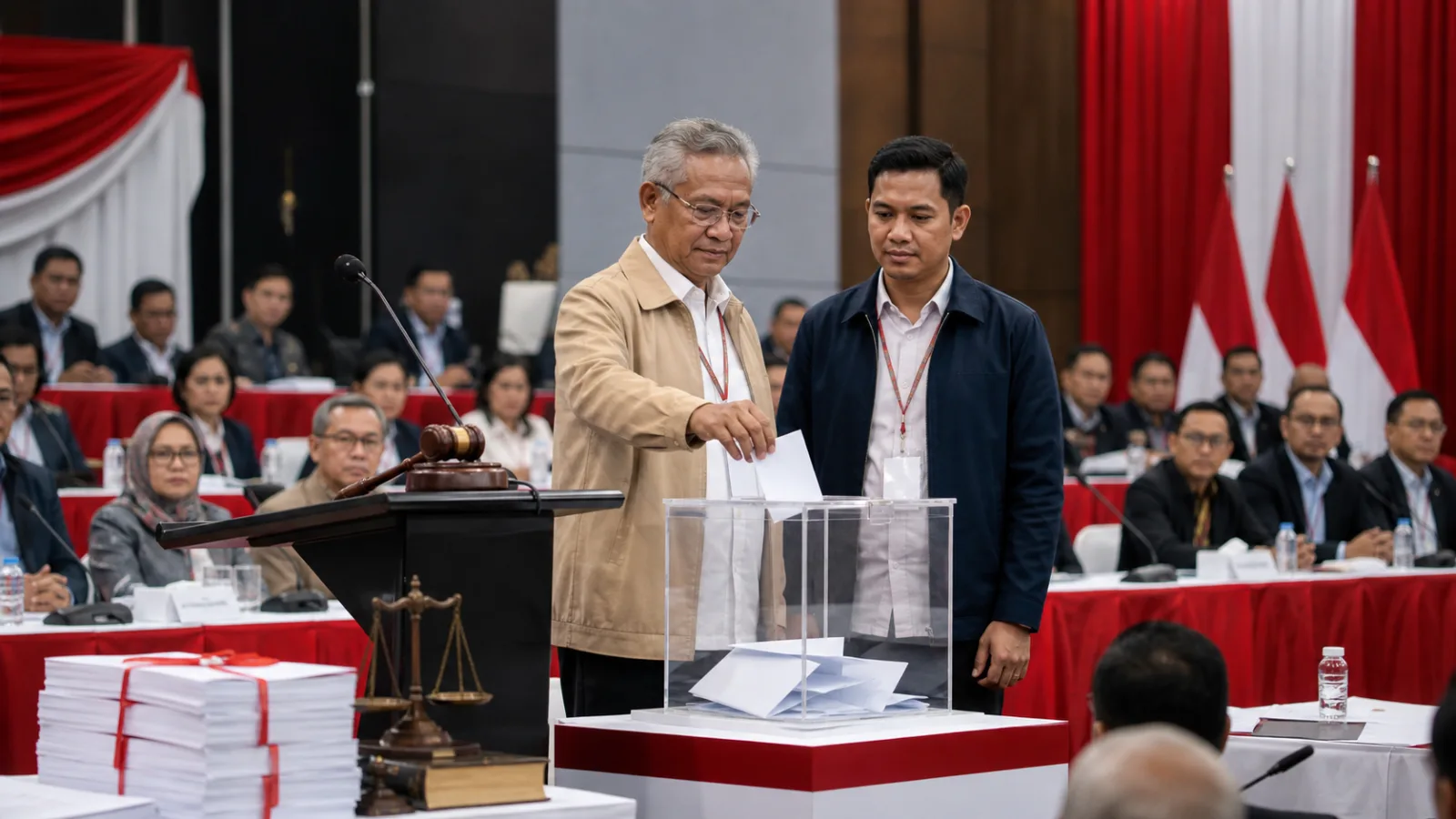
Jakarta, literasihukum - The Constitutional Court (MK) Decision No. 62/PUU-XXII/2024 records a new history in Indonesian politics, particularly regarding the nomination of President and Vice President in elections. With this decision, the nomination threshold that previously required political parties or a combination of parties to obtain a minimum of 20% of DPR seats or 25% of the national valid votes in the previous election has now been abolished.
Prof Jimly Asshiddiqie, Chief Justice of the Constitutional Court for the 2003-2008 period, expressed his appreciation for the decision. According to him, there are three important points to note. First, the change in the Constitutional Court's attitude in granting the request to review Article 222 of Law No. 7 of 2017 concerning General Elections is an important milestone, considering that similar requests have always been rejected before.


Shift in the Court's Stance
According to Prof Jimly, the shift in the Constitutional Court's stance is related to political developments, especially the emergence of only two pairs of candidates in the last few elections. This pattern, besides dividing society into two camps, also shows the dominance of incumbents who almost always win.
“This shows that existing political institutions are not strong and feudal culture has not disappeared,” said Prof Jimly in a discussion themed The Future of Indonesian Democracy: Presidential Threshold After the Constitutional Court Decision.
Political Culture and Its Impact
Prof Jimly assesses that the weakness of political institutions and the still strong feudal culture are evident in political contests. For example, political support from influential figures often determines the outcome of elections, unlike the United States, which prioritizes a meritocracy system.
“Unlike here, the President only has to wink and officials immediately understand what he means,” he said. This situation also causes political parties to tend to be pragmatic in forming coalitions, which made the Constitutional Court reconsider the nomination threshold policy.
More Inclusive Elections
Prof Jimly also emphasized the importance of more inclusive elections by involving more pairs of candidates. This reflects Indonesia's diversity. Political parties must ensure a democratic selection process, such as through conventions with an independent team to select the best candidates.
“It is fortunate that this Constitutional Court decision has been well received by stakeholders. It remains to be seen how it will be regulated in the Election Law,” he suggested.
Impact on Political Competition
The Head of the Department of Constitutional Law at UII, Jamaludin Ghafur, stated the abolition of presidential threshold can increase competition in the Presidential Election. With more candidate choices, the public is expected to be more enthusiastic about using their right to vote, while candidates will be more responsive to public aspirations.
Prof Taufiqurrohman Syahuri from UPN Jakarta added that the abolition of the nomination threshold is closely related to people's sovereignty.
"The people must choose candidates who have gone through a rigorous selection process to ensure the quality of leaders," he concluded.



















Comments
0Share your perspective politely, stay relevant, and focus on the article. Comments appear after moderation.
Join the discussion
Write a clear, polite response that stays on topic.
No comments yet. Be the first to discuss.
Comments will appear after moderation.