
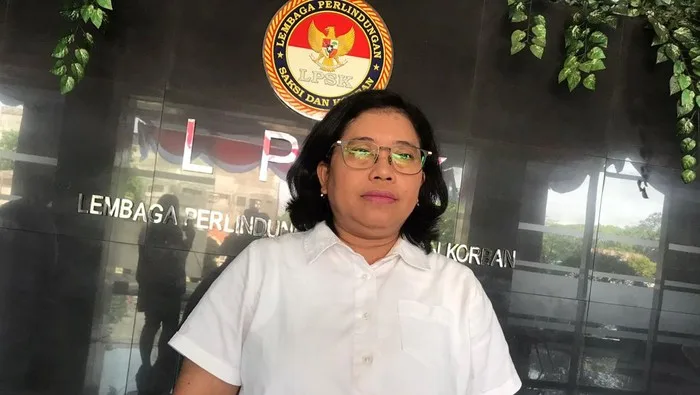
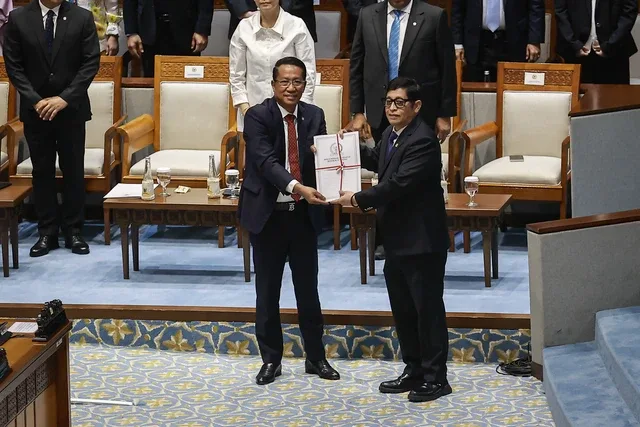
JAKARTA, LITERASIHUKUM.COM — Efforts to expand access to justice and protection for witnesses and victims of crime have finally come to fruition. The House of Representatives (DPR) of the Republic of Indonesia officially ratified the Bill on the Protection of Witnesses and Victims (RUU PSDK) into law in a plenary session. One of the crucial breakthroughs in this new policy is the mandate for the Witness and Victim Protection Agency (LPSK) to establish representative offices at the regional level to shorten the service control span.
Deputy Chairperson of LPSK, Susilaningtias, confirmed that the newly passed law provides a strong legal umbrella for the decentralization of protection services. However, she emphasized that the establishment of representative offices will not be carried out haphazardly in all provinces at once, but will be executed selectively and gradually based on mapping the level of need and escalation of criminal vulnerability in each region.


"The point is that LPSK can form representatives in the regions according to needs. Indeed, the wording in Article 31 states that the LPSK's institutions consist of leaders and a secretariat general. However, the second paragraph stipulates that LPSK can form representatives in the regions which are implemented according to needs," explained Susilaningtias when confirmed, Wednesday (22/4/2026).
Institutional Hierarchy and Selection Mechanism
Structurally, the presence of representatives in the regions is designed so that it does not run independently or overlap with central policies. Referring to Articles 47 and 48 of the UU PSDK, Susilaningtias ensures that the working procedures of representative offices have a hierarchical relationship and a direct line of coordination that is responsible to the Chairperson of LPSK at the center.
Later, each regional representative office will be headed by one chairperson and accompanied by a maximum of four deputy chairpersons. To maintain the independence, integrity, and quality of the figures who hold office, the mechanism for filling these regional leadership positions is planned to involve an independent selection committee (Pansel), as agreed upon in depth in the previous DPR Working Committee (Panja) meeting.
From the perspective of law enforcement effectiveness, the expansion of this institutional structure is seen as a concrete answer to the geographical constraints that have hindered the mobility of protection teams. Prior to the new PSDK legal framework, victims of serious crimes in areas far from the capital—such as in the hinterland or outermost islands—often had to face bureaucracy and long waiting times because they had to wait for the arrival of LPSK investigators from Jakarta.
With the establishment of regional representatives, the state protection institution is expected to be able to respond to reports and mitigate threats instantly (real-time), especially in handling high-risk cases that require rapid evacuation, such as criminal acts of corruption, sexual violence, and human trafficking.

















Comments
0Share your perspective politely, stay relevant, and focus on the article. Comments appear after moderation.
Join the discussion
Write a clear, polite response that stays on topic.
No comments yet. Be the first to discuss.
Comments will appear after moderation.