

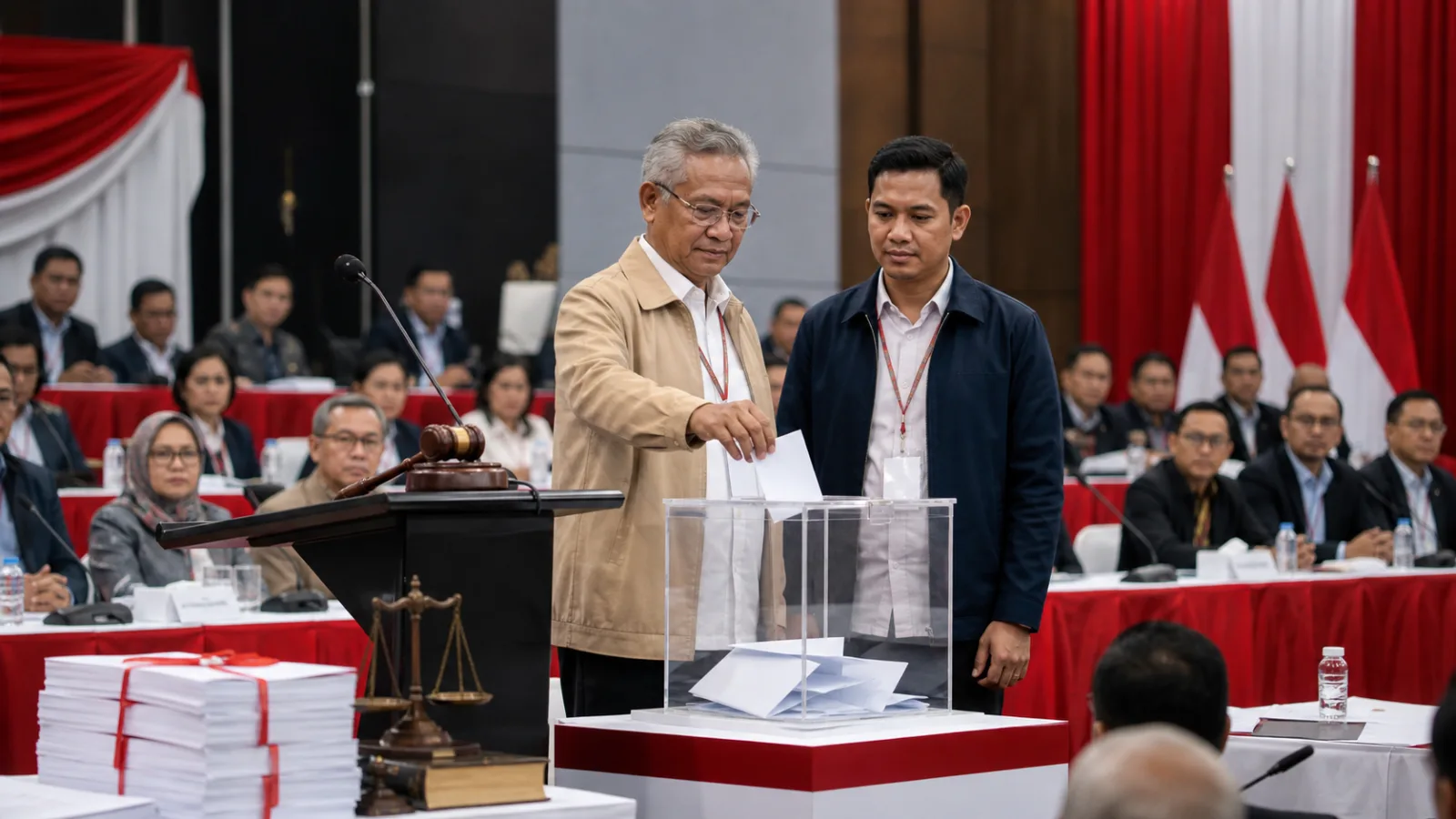
JAKARTA, Legal Literacy – Nine advocates and one student have filed a judicial review of Article 158 letter e of Law Number 20 of 2025 concerning the Criminal Procedure Code to the Constitutional Court (MK). The norm being challenged regulates pre-trial objects related to “delay in handling cases without legitimate reasons”. The Petitioners assess that the formulation of the article creates a normative vacuum regarding who the legal subjects are who have the right to file a pre-trial motion, which leads to legal uncertainty and weakens judicial control over the passive attitude of investigators.
The petition is registered as Case Number 69/PUU-XXIV/2026 and was presented in a preliminary examination hearing at the Constitutional Court on Wednesday, February 25, 2026.
Petitioners Highlight Normative Vacuum: Who Has the Right to File a Pre-Trial Motion?
In the hearing, the Petitioners' legal counsel (Irpan Suriadiata) emphasized that the main problem is not merely the recognition of “delay” as a pre-trial object, but rather the lack of clarity regarding the party that can become a Petitioner when investigators delay/remain passive without legitimate reasons. The Petitioners associate this issue with the guarantee of the rule of law, equality before the law, and fair legal certainty in the 1945 Constitution.
The Petitioners also assess that, in practice, delays in handling…



















Comments
0Share your perspective politely, stay relevant, and focus on the article. Comments appear after moderation.
Join the discussion
Write a clear, polite response that stays on topic.
No comments yet. Be the first to discuss.
Comments will appear after moderation.