

Legal Literacy - Amidst the ongoing practice of holding multiple positions by deputy ministers, the Constitutional Court (MK) has once again reaffirmed its unwavering stance: the prohibition of holding multiple positions that binds ministers mutatis mutandis also applies to their deputies. This affirmation is the core consideration in Decision Number 21/PUU-XXIII/2025, which once again highlights the flaws in governance.
Normatively, the basis for this prohibition is very clear, namely Article 23 of the State Ministry Law. This rule prohibits ministers from holding other positions, whether as state officials, commissioners/directors of BUMNs and private companies, or leaders of organizations funded by the APBN/APBD. The Court's legal logic is straightforward: because deputy ministers are state officials appointed based on the President's prerogative—just like ministers—they are bound by the same limitations.


However, this clear norm on paper becomes blurred in its implementation. The root of the problem is a "naughty" interpretation of the previous Constitutional Court Decision, namely Number 80/PUU-XVII/2019. At that time, the decision stated that the application was "inadmissible" because it only touched on formal (procedural) aspects, without going into the substance of the application. This loophole is exploited to assume ratio decidendi (the legal reasoning behind the decision) in the judge's considerations—which explicitly prohibits deputy ministers from holding multiple positions—does not have executorial power.
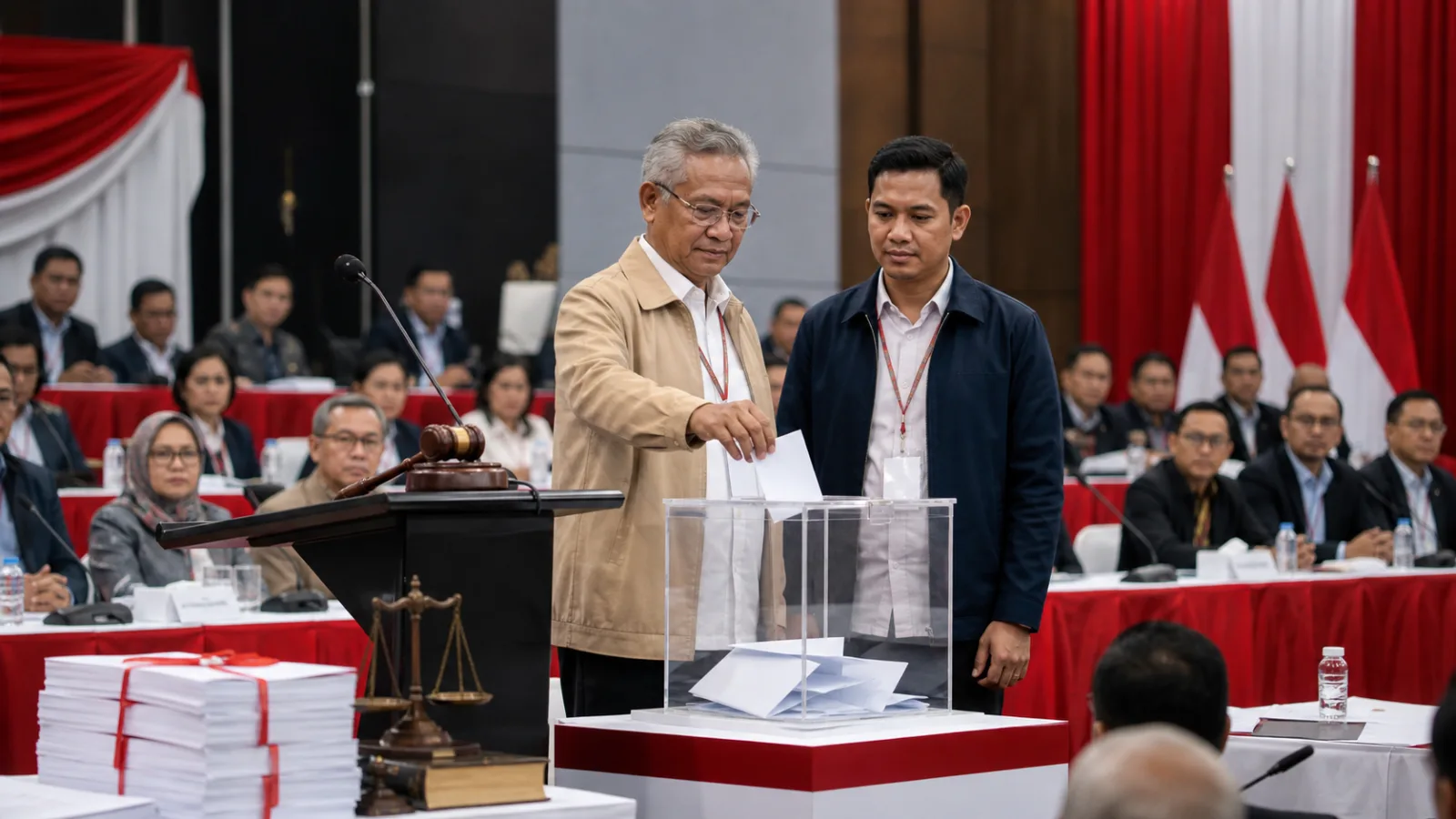
The latest attempt to close this loophole through an application filed by the late Juhaidy Rizaldy Roringkon also failed. The Court again stated that the application was inadmissible, not because its substance was weak, but because the applicant had passed away, thus losing legal standing (legal standing) to continue the case.
Although two lawsuits were rejected for procedural reasons, the Court's substantive message has never changed and has only become more crystallized. Through its consistent legal considerations, the Court has provided a final interpretation. Now, the hot potato is no longer in the Court's hands, but rather on the ethical commitment and legal compliance of the President as the holder of the highest executive power. Without strict execution and supervision from the Palace, every affirmation from the Court will only become a paper tiger—roaring in the courtroom, but toothless in state practice.


















Comments
0Share your perspective politely, stay relevant, and focus on the article. Comments appear after moderation.
Join the discussion
Write a clear, polite response that stays on topic.
No comments yet. Be the first to discuss.
Comments will appear after moderation.