

JAKARTA, Literasi Hukum – The Constitutional Court (MK) partially granted petition Number 71/PUU-XXIII/2025 and declared the phrase “directly or indirectly” in Article 21 of Law Number 31 of 1999 concerning the Eradication of Corruption Crimes (Corruption Law), as amended by Law 20/2001, contrary to the 1945 Constitution and has no binding legal force.
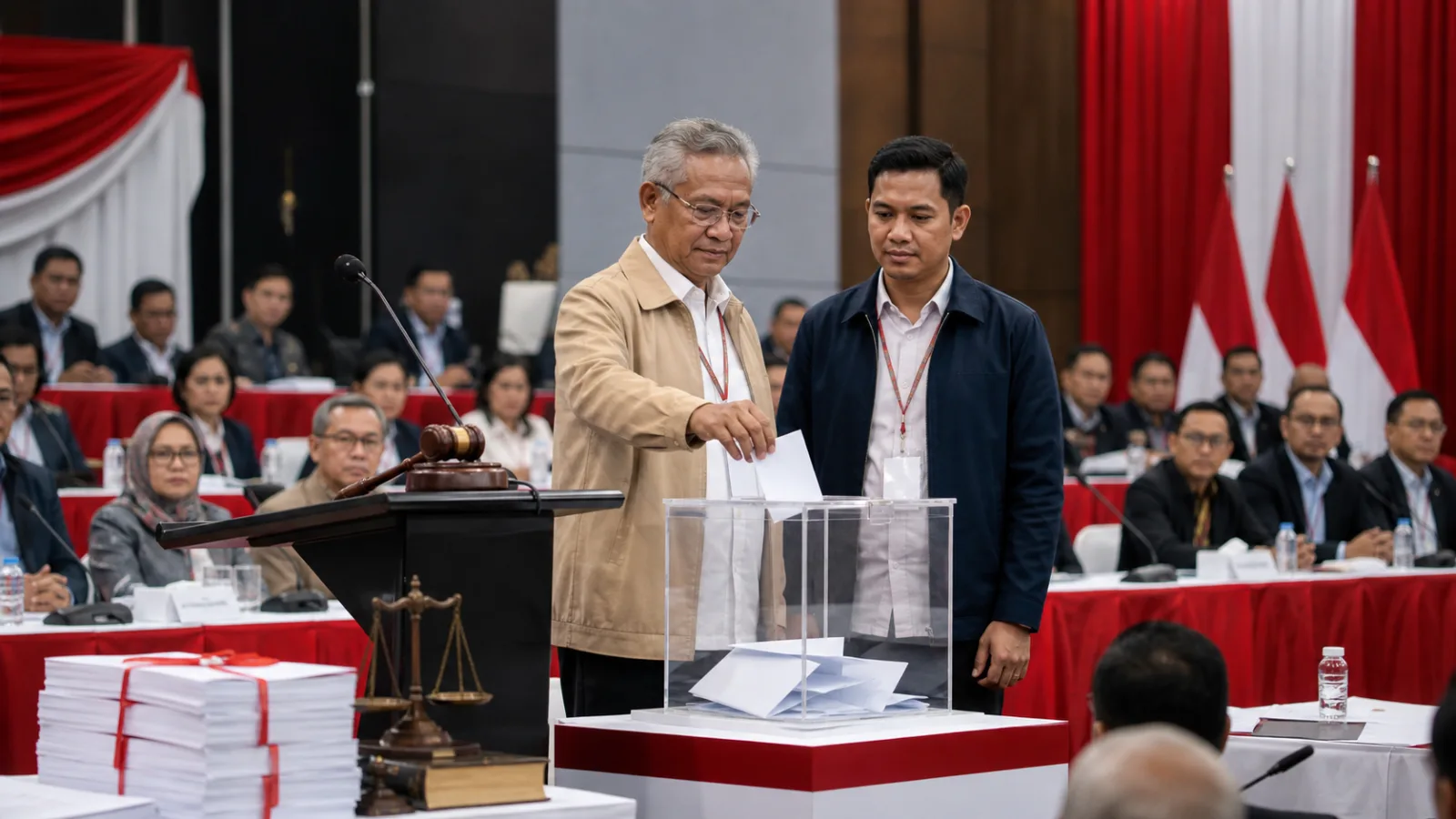
The decision was read in a plenary session on Monday (2/3/2026). Constitutional Justice Arsul Sani stated that the phrase has the potential to be used broadly and flexibly to ensnare parties deemed to obstruct legal proceedings, without clear limitations.


Constitutional Court: The Phrase “Indirectly” Potentially Overcriminalization
Article 21 of the Corruption Law has so far regulated the offense obstruction of justice (obstruction of justice) dengan unsur perbuatan “mencegah, merintangi, atau menggagalkan secara langsung atau tidak langsung” penyidikan, penuntutan, dan persidangan perkara korupsi.
Menurut Mahkamah, penggunaan frasa “atau tidak langsung” berpotensi memperluas tafsir secara subjektif oleh aparat penegak hukum, sehingga tindakan yang berada dalam koridor sah—seperti advokasi, kegiatan jurnalistik, diskusi akademik, hingga ekspresi publik—dapat dikategorikan sebagai perintangan proses hukum.
Mahkamah menilai hal tersebut mengaburkan batas antara perbuatan yang dilindungi kebebasan berekspresi dengan perbuatan melawan hukum, dan berpotensi menimbulkan kriminalisasi berlebihan (overcriminalization).
Tetap Lindungi Proses Hukum, Tanpa Frasa Elastis
Dalam pertimbangannya, MK menegaskan bahwa delik obstruction of justice tetap diperlukan untuk melindungi proses penegakan hukum dari upaya penghalangan. Namun, unsur tersebut harus dirumuskan secara lebih pasti agar tidak melanggar prinsip kepastian hukum yang adil sebagaimana dijamin Pasal 28D ayat (1) UUD 1945.
Mahkamah juga menyinggung bahwa dalam perkembangan hukum pidana nasional, termasuk dalam Undang-Undang Nomor 1 Tahun 2023 (KUHP baru), pengaturan delik perintangan peradilan tidak lagi mencantumkan frasa “secara langsung atau tidak langsung”.
Selain itu, rujukan internasional seperti United Nations Convention Against Corruption (UNCAC) indeed regulates obstruction of justice, but the Court deems that national norms must still comply with Indonesia's constitutional principles.
petitioner's Background
The petitioner in this case is a lawyer Hermawanto, who argues that the phrase “or indirectly” can be used to ensnare citizens who voice public opinions, hold campus discussions, press conferences, demonstrations, or conduct social control through media.
According to the petitioner, if investigators subjectively assess that such public expressions affect legal proceedings, then criminal threats may arise, which ultimately disrupts freedom of expression in a democratic state.
With the deletion of the phrase, Article 21 of the Anti-Corruption Law now continues to regulate obstruction of justice, but without the expansion of meaning deemed elastic.
This news is a synthesis of information from several credible sources to present a verified, complete, and balanced report to readers.

















Comments
0Share your perspective politely, stay relevant, and focus on the article. Comments appear after moderation.
Join the discussion
Write a clear, polite response that stays on topic.
No comments yet. Be the first to discuss.
Comments will appear after moderation.